
The Double Mask: Race, Autism, and Authentic Leadership
What if the greatest barrier to authentic leadership isn’t confidence, but the energy it takes to hide who we are?
Many leaders spend years performing versions of themselves they believe will be accepted, credible, or safe. For Black women, autistic leaders, and others navigating systems shaped by bias and exclusion, the costs of masking can be profound—including burnout, isolation, and diminished wellbeing. In this deeply personal essay, former Fortune 200 executive and C4LL coach Carla Harvey reflects on discovering she was autistic in her fifties and explores how unpacking the intersections of race, neurodivergence, and masking transformed her understanding of authenticity, belonging, and sustainable leadership.

There are some things you learn because someone teaches you. And there are other things you learn because your survival depends on it. Long before I discovered the word masking, I had already become an expert at it. I had crafted and honed that skill since childhood. This was the only way that I was going to fit in.
As a Black woman, I learned early that people were always watching. Watching how I spoke, how emotional I appeared, how confident I sounded, whether I looked "professional" and being criticized for it. Whether I smiled enough, whether I spoke too loudly, or whether I spoke at all. Without realizing it, I became fluent in reading every room before I entered it.
I didn't know then that I was wearing my first mask. I considered myself a chameleon; a shapeshifter. I could show up in any environment and adjust accordingly. I wore it like a badge of honor.
Years later, another realization would change everything.
The Mask I Never Knew I Was Wearing
By the time I discovered I was autistic, I had spent decades wearing two masks—one shaped by race and one shaped by neurodivergence. They became so intertwined that, looking back, it's hard to tell them apart.
When I was diagnosed with autism spectrum disorder (ASD) in my mid-fifties, my first reaction wasn't relief, it was grief. Grief for the woman who spent decades believing she could never quite hit the mark. Grief for the woman who replayed conversations over and over in her head. Grief for the woman who exhausted herself trying to understand unwritten rules everyone else seemed to know instinctively. I grieved the woman who practiced facial expressions, monitored her voice, memorized scripts before meetings, and studied people the way other people studied textbooks. I thought everyone worked this hard just to exist. I was wrong.
Researchers now recognize that many autistic women—particularly those diagnosed later in life—develop sophisticated masking strategies that often delay diagnosis because they become exceptionally skilled at appearing socially "typical." For me, masking wasn't a strategy, it became my identity.
Then Add Being a Black Woman
But my story doesn't end there, because I wasn't carrying one invisible burden. I was carrying two. Black women have long spoken about the pressure to constantly manage how they're perceived. We learn to code-switch and overcompensate—to soften our voices, manage our expressions, work twice as hard, remain composed, and avoid confirming stereotypes that were never ours to carry.
Researchers have described this as racialized emotional labor—the constant work of managing one's behavior to navigate bias and discrimination. For me, those expectations merged with autistic masking until I couldn't tell where one ended and the other began. Was I scripting because I was autistic or because I was Black? Was I exhausted because of sensory overload or because I spent every day anticipating how I might be judged?
The answer, I eventually realized is…...
It was both.
Living Behind Two Masks
There was a season in my leadership career when I believed being a great leader meant always being available, carrying everyone else's problems, and never letting anyone see me struggle.
Looking back, I realize I was paying what I now call the Performance Tax—the price we pay when we believe our value comes from always producing, always performing, and always having it all together.
At first, it looked like replaying difficult conversations, overpreparing for every executive meeting, and carrying everyone else's emotional load while ignoring my own.
Then one day, it caught up with me.
I walked out of a grocery store, leaving a full cart in the dairy aisle because I simply couldn't do one more thing.
Some evenings I'd sit in my car in the garage, too emotionally exhausted to walk inside. My family deserved the best of me, but too often they got what was left.
At the time, I thought this was simply the cost of leadership. Now I know it was the cost of believing I always had to perform.
Looking back over my career, I can see it everywhere. Overpreparation, perfectionism, relentless drive to avoid mistakes, constant scanning of people's reactions, emotional calculations and the need to recover alone after meetings. I became highly successful. People described me as calm, professional, confident, and resilient. What they didn't see was how much energy it took to create that version of myself. Every day felt like performing a role I had rehearsed for decades. The accolades were real. So was the exhaustion.
The Cost of Constant Performance
Masking works, until it doesn't. I remember sitting at the conference table many times going blank mid-sentence. Unable to even recall the subject of the discussion. Many late-diagnosed autistic adults describe burnout unlike ordinary stress—an overwhelming loss of energy, executive functioning, and emotional capacity after years of sustained masking.
When I read those descriptions, I felt seen for the first time. Not because someone was explaining autism but because someone was explaining “me”. Suddenly, decades of confusion began making sense. It wasn't weakness, laziness, or oversensitivity. It was a nervous system that had spent a lifetime working overtime without the equivalent reward.
Taking Off the Masks
Today, I still mask sometimes. Most of us do. The difference is that now I know when I'm doing it. More importantly, I know I deserve spaces where I don't have to. That has changed how I lead, how I coach and how I listen. Because every person sitting across from us is carrying a story we cannot see.
Some are masking neurodivergence, grief of a loved one, or childhood trauma. Some are masking the experience of navigating a world that wasn't designed with them in mind. Effective leadership isn't about asking people to perform better. It's about creating environments where less performance is required.
Authentic Leadership: What I Hope We Learn
For years, I believed authenticity was something people earned after they became successful. Now I believe authenticity is what makes success sustainable. I don't share my story because I want sympathy. I share it because I know I'm not the only one. There are Black women quietly carrying invisible expectations. There are autistic women still wondering why life feels harder than it seems to be for everyone else. There are leaders who have become so accustomed to wearing masks that they've forgotten what their own face feels like.
If this story helps even one person feel less alone... Then perhaps taking off my masks was worth it.
What masks have you worn so long that they've begun to feel like your face?
And what might become possible if you experimented with setting one of them down—even briefly—in a person, place, or community that feels safe enough?
-----
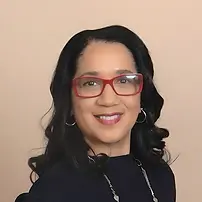
Carla Harvey is an executive coach, leadership strategist, and emotional intelligence practitioner with over 35 years of experience guiding teams and organizations. After being diagnosed as autistic in her mid-fifties, she began exploring the intersection of neurodiversity, leadership, and authentic human connection. Through her coaching with C4LL and her practice, Remarkably You Coaching, she helps executives and emerging leaders build self-awareness, lead with emotional intelligence, and create workplaces where people can thrive without hiding who they are. Carla is especially passionate about supporting neurodivergent leaders and advancing conversations around inclusion, belonging, and the unseen experiences that shape how we lead. She believes that our greatest leadership strength often emerges when we stop performing and start showing up as our whole selves.
-----
If this reflection resonates, you are not alone. Many of the leaders we work with are navigating this exact tension between acceptance and authenticity, between survival and bringing our whole selves to work. Through coaching at the Center for Liberated Leadership, we support leaders in leading authentically and strategically.
Learn more or set up a Leadership Clarity Call to explore how coaching with Carla or one of our other coaches can help you transform your leadership.
-----
About the Center for Liberated Leadership
The Center for Liberated Leadership connects and supports BIPOC, women, LGBTQ and transformational leaders so that they can lead with authenticity, purpose and joy. The Center's executive coaches help leaders navigate uncertain contexts and relentless workloads, beat burnout and maintain sustainable work practices.
Join the Conversation:
#AuthenticLeadership
#NeuroSpicyLeaders
#NeurodivergentLeadership


Comments