
Leading Out Loud After a Year of Fear
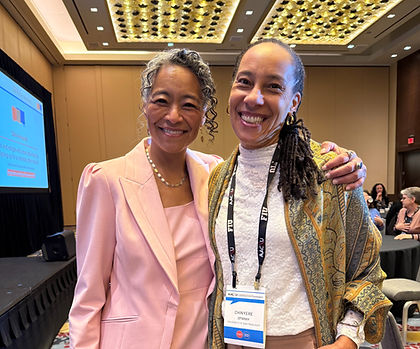
Chinyere Oparah explores what it means to lead with courage under pressure. Reflecting on the fallout from the 2025 DEI executive order and the conversations sparked at AAC&U, she examines the tension between strategy and complicity, and invites leaders to consider how small, collective acts of integrity shape institutional culture.
In January 2025, the anti-DEI executive order “Ending Illegal Discrimination and Restoring Merit-Based Opportunity” sent a tremor through higher education. Within days, campuses across the country began reacting. Centers were renamed. Units were restructured or absorbed. Job titles shifted. Staff whose support was deeply important to student success were laid off. Leaders whose work centered equity and inclusion suddenly found themselves navigating job insecurity, scrutiny, and erasure. Students felt a shift, not only in language, but in climate. At the center of these shifts was a deeper question of who belongs on college campuses and a backlash against the diversification of higher education.
Yet even as institutions moved quickly to protect themselves, legal scholars were urging caution. On February 20, 2025, more than forty law professors issued a memo clarifying that common DEI initiatives remained lawful under federal civil rights law and Supreme Court precedent. The memo emphasized that the executive order did not change existing law, did not prohibit First Amendment-protected institutional speech, and did not require the dismantling of academic programs. The following day, a federal judge granted a preliminary injunction blocking key portions of the order in the NADOHE-led case.
In other words, much of what institutions thought they had to do, they did not legally have to do.
And yet, over the course of the past year, significant harm occurred. Some institutions preemptively shut down programs that were never required to be dismantled. Others changed names, or quietly distanced themselves from language that had long signaled institutional values. For leaders and staff whose professional identities are intertwined with equity work, this was not simply a strategic pivot. It felt like institutional betrayal. For students who relied on these spaces, it felt like abandonment.
At AAC&U this spring, L. Song Richardson, former president of Colorado College, challenged us to acknowledge a difficult truth: that fear can make complicity feel like strategy.
Richardson was not condemning prudence. She was inviting us to discern when prudence is an excuse for not acting in alignment with our values. Academic leaders carry enormously difficult responsibilities. They must assess legal risk, steward budgets, and protect institutions from attack. But when strategy becomes anticipatory surrender – when we dismantle before we are required to dismantle, when we shrink before the law compels us to shrink – we practice compliance. Over time, what we practice becomes culture.
The legal memo made something clear: DEI initiatives that do not employ racial classifications remained legally secure. The executive order itself conceded that DEI initiatives are not inherently unlawful. And yet, many institutions had already acted as though the outcome were predetermined.
Leading out loud in this moment is not simply about whether one stands up against a particular executive action. It is about how leaders hold steady in ambiguity. It is about whether fear outruns discernment and whether institutional self-protection eclipses institutional soul.
The injunction against the executive order may bring legal relief. But legal relief does not automatically repair institutional trust. It does not restore programs quietly dismantled. And it does not immediately rebuild morale for leaders who felt exposed or expendable. The question now is not only whether institutions can legally maintain equity initiatives. It is whether they will choose to repair the harm, heal the wounds of institutional betrayal and learn the lessons of that pre-emptive surrender.
Our AAC&U 2026 panel Leading Out Loud provided examples from the trenches of facing our fears and charting a path that is both courageous and strategic. Panelists spoke about the pressures on those in positional authority to act with political expediency, suppress student protest, and support leadership directions that may conflict with their values. They also named the power of vulnerability and humor, collaborative co-design and quietly standing in our truth as tools in the face of potential judgment to shift institutional cultures toward justice.
Leading out loud does not always look like a heroic public stance. It often looks quieter and more collective. It can mean refusing to erase language until legally compelled. It can mean engaging staff in a dialog about the real fears and struggles involved in navigating a particular mandate, rather than cloaking decisions in bureaucratic neutrality. It can mean preserving positions that reflect institutional values, protecting scholars whose work is politically contested, and ensuring that students do not receive the message that compliance with injustice and federal overreach is the only option. It can also mean building collective power by strengthening cross-institutional alliances, convening leaders who need space to strategize without scrutiny, and cultivating communities of practice that sustain courage over time. This architecture of resistance matters as much as individual acts of visibility.
We can look to teachers in Russian schools following the invasion of Ukraine for a powerful example of covert resistance. In a recent study, Jonna Alava documented how teachers who were required to enact patriotic rituals and teach state-sanctioned narratives, engaged in subtle acts of resistance – rushing through propaganda lessons, muting required videos, using coded language to signal dissent to attentive students. These were not grand acts of rebellion. They were micro-acts of dignity despite the threat of substantial fines, detention and home searches. These Russian teachers demonstrate the power of individual micro-acts, especially when these become part of a collective conversation. When ritualized compliance becomes normalized, it narrows what feels possible. When small acts of integrity accumulate, they show us that another world is possible and serve to encourage us all.
Leading out loud after a year of fear requires more than celebrating a court ruling. It requires honest reflection about where prudence was necessary and where preemptive retreat may have drifted into complicity. It requires rebuilding alignment between strategy and conscience. It requires recommitting to enacting our principles, not protecting beloved institutions from scrutiny at all cost.
History often turns less on legal rulings than on the daily choices leaders make under pressure. Not only in moments of public scrutiny, but in quieter rooms where trade-offs are negotiated, fear competes with conviction, and expedience tempts us to compromise. The real inflection points are rarely dramatic. They unfold in what we normalize, in what we protect, in what we are willing to risk, and in what we quietly relinquish.
Leading out loud is a practice. It asks leaders to align strategy with integrity, to build collective power rather than isolate themselves in positional authority, and to cultivate cultures where courage is shared rather than outsourced to a few visible figures. It requires the discipline to pause before reacting, the humility to listen deeply, and the steadiness to act in ways that preserve dignity even when outcomes are uncertain.
The deeper work before us is not simply to respond to this moment, but to decide what kind of leaders we will be and stay rooted in our truth. That is the invitation of leading out loud.
---
This is the first in a series of blogs on C4LL’s 2026 theme: Leading Out Loud. If you have something to add to the conversation, we’d love to hear from you. Please contact us.
Chinyere Oparah is an executive coach, strategist and educator. She has served in senior leadership roles in the nonprofit and higher education sectors, including dean, provost and vice president for academic affairs for over three decades and is the founder and CEO of the Center for Liberated Leadership. Sign up for a free leadership consultation with her here.
About the Center for Liberated Leadership
The Center for Liberated Leadership connects and supports BIPOC, women, LGBTQ and transformational leaders so that they can lead with authenticity, purpose and joy. The Center's executive coaches help leaders navigate uncertain contexts and relentless workloads, beat burnout and maintain sustainable work practices.


Comments