
When Leadership Is Tested: How Coaching and Peer Support can Carry Us Through Hard Times
Introducing LEAD Vanguard, LEAD Horizon and LEAD Nexus, three new executive coaching circles from the Center for Liberated Leadership and NADOHE.
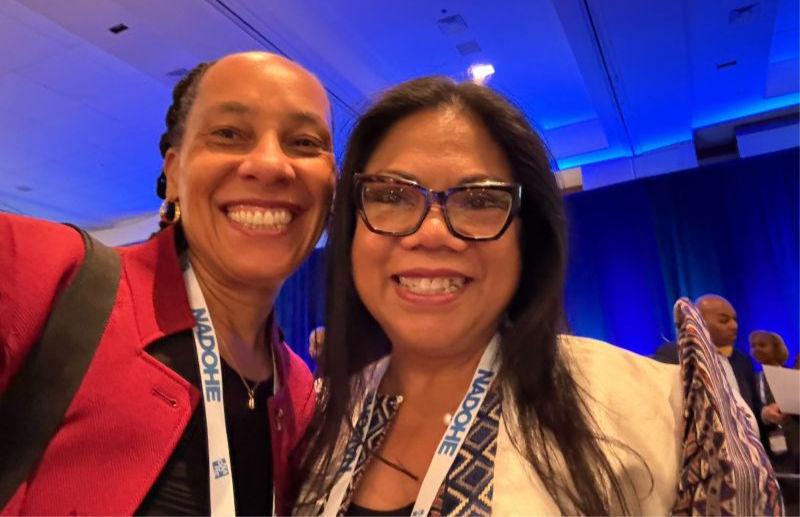
Over the past year, I have spent many hours coaching Chief Diversity Officers and other equity- and justice-oriented leaders through some of the most difficult moments of their careers.
Some have come to coaching while still inside their institutions, trying to lead amid political scrutiny, legal uncertainty, shifting institutional commitments, exhausted teams, and a relentless pace of change. They are confronting decisions that resist easy answers: Where do I need to be pragmatic? Where must I hold the line? What am I willing to compromise in order to protect our community members, and what would constitute a compromise of my own integrity? What does courage require here, and what does strategy require?
Others have come to coaching after the institution itself has made the decision for them.
Their positions have been eliminated. Their responsibilities have been dismantled or reassigned. Some have experienced abrupt exits from institutions to which they had given years of their lives.
What has stayed with me is how often these apparently different experiences are connected.
The leadership dilemmas that keeps us up at night
We often talk about courageous leadership as though courage were self-evident: know what you believe and stand up for it.
The reality of institutional leadership is considerably more complicated.
For educational leaders in the current environment, nearly every significant decision can involve competing responsibilities. You may be trying to protect vulnerable people while preserving your own ability to remain at the table. You may need to determine whether changing language is a strategic adaptation that allows important work to continue or a concession that fundamentally changes the work itself. You may be carrying responsibility for a team whose members are disillusioned or exhausted while privately experiencing those same emotions yourself.
This is where I have come to think about strategic courage.
Strategic courage is the capacity to lead boldly and with integrity while also practicing nuanced and adaptive thinking. It asks us to move beyond reactive firefighting toward longer-term institutional vision; to cultivate relationships and collaboration rather than imagining courageous leadership as a solitary act; and to sustain ourselves and others through uncertainty and change.
Sometimes courage means speaking.
Sometimes it means waiting.
Sometimes it means finding another route toward the outcome you are trying to achieve.
And sometimes it means recognizing the line you are no longer willing to cross.
These are difficult distinctions to make from inside the intensity of institutional life. They require space for reflection, honest conversation, and thought partnership with people who understand both the values at stake and the complexity of organizational leadership.

When the institution lets you go
There is another conversation I have found myself having far too often.
A leader loses a position, sometimes abruptly and sometimes after months of uncertainty. And alongside all of the practical questions about finances, career strategy, and what comes next is something much deeper.
For too many, it feels like institutional betrayal.
People who have spent years helping institutions live more fully into their stated commitments suddenly find themselves treated as expendable. Leaders accustomed to being competent, strategic, and relied upon can find their confidence profoundly shaken.
Standard career-transition support can miss this entirely.
The question isn’t simply, How do I position myself for my next role?
There may be other questions that have to come first.
What just happened to me?
What parts of this experience belong to me, and what belongs to the institution and the larger political environment?
What do I still believe about my leadership?
What am I no longer willing to carry?
And what could become possible in the chapter that comes next?
A career disruption can be a site of grief and disorientation. But with sufficient space, support, and reflection, it can also become a site of reclamation and possibility.
Three circles for this leadership moment

These experiences led the Center for Liberated Leadership into a new partnership with the National Association for Diversity Officers in Education (NADOHE) to create two executive coaching circles for leaders navigating these different sides of our current leadership landscape.
LEAD Vanguard is a confidential brain trust for senior leaders who remain at the forefront of institutional change. Beginning October 14, participants will explore how to align courage with strategy, lead with integrity amid institutional risk, distinguish strategic adaptation from values compromise, support teams through uncertainty and loss, and cultivate more sustainable leadership practices.
LEAD Horizon, beginning October 8, is designed for leaders navigating forced or chosen career disruption and transition. It offers a space to process what has happened, reconnect with leadership identity and confidence, clarify what comes next, and move toward the next chapter with greater intention.
Both are three-month coaching experiences combining six small-group coaching sessions with an individual executive coaching session and additional resources.
I am honored to lead these circles and particularly grateful to NADOHE President and CEO Emelyn dela Peña, whose own experience of displacement helped catalyze the creation of Horizon and whose leadership has made space for this partnership.
And coming in the Spring, C4LL coach Yvette Alex-Assensoh will facilitate LEAD Nexus, a circle for mid-career leaders who occupy a uniquely challenging liminal space between senior leadership and operational teams.
From individual coaching to collective space
For me, these circles also represent a natural extension of my 1:1 executive coaching. Individual coaching offers something extraordinarily valuable: a confidential relationship in which a leader can bring the most tangled, politically complex, or personally difficult dilemmas of leadership and think about them without having to perform certainty.
The circles add something different. They allow leaders to discover that some of what they have been carrying as a private leadership struggle is, in fact, shared. They create opportunities to learn from the discernment, experimentation, courage, and hard-won wisdom of other leaders navigating similar terrain.
We need both.
We need confidential spaces where leaders can say what they cannot yet say elsewhere. We also need communities where they do not have to explain the political context before they can begin talking about its impact. And we need leadership development that helps people remain courageous without treating exhaustion, isolation, or self-sacrifice as evidence of commitment.
Because the question before us is not simply whether leaders who care about equity and educational access can survive this moment.
It is whether they can remain connected to their courage, their strategic capacity, their wellbeing, and their sense of possibility while helping to shape what comes after it.
Questions for Reflection
Where in your leadership are you being asked to distinguish strategic adaptation from values compromise?
What are you carrying privately that might become more manageable in the presence of trusted thought partners?
And whether you are staying, leaving, or still discerning what comes next: What would it mean to move through this moment without accepting isolation as an acceptable cost of leadership?
If you are grappling with these questions, and want to explore what kind of support would be best for your in this season, you are invited to sign up for a free liberated leadership consultation.
Chinyere Oparah is an executive coach, strategist and educator. She has served in senior leadership roles in the nonprofit and higher education sectors, including dean, provost and vice president for academic affairs for over three decades and is the founder and CEO of the Center for Liberated Leadership and NeuroSpicy Leaders. Sign up for a free leadership consultation with her here.
About the Center for Liberated Leadership
The Center for Liberated Leadership (C4LL) cultivates courageous, sustainable leadership, strengthens organizations, and advances more equitable and neuroinclusive workplaces. Through thought leadership and community dialogue, we are reimagining leadership as a practice that centers authenticity, freedom, and joy.
Join the Conversation
#StrategicCourage


Comments